
Elton Fred Sharp
1926
Elton Fred Sharp came to Greeneville as one of the many accomplished college football players among the school’s early coaches. A small but exceptionally fast and elusive running back, he became one of King College’s best-known football players during the early 1920s, played three sports for the Tornado and began coaching high school athletics before his own college career had ended. His exploits at King attracted attention well beyond Bristol, with his abilities receiving coverage across much of the eastern United States.
Born March 9, 1900, Sharp grew up in Jamestown, New York, where he played football at Jamestown High School. He came south to attend King College in Bristol as a freshman in 1921.¹
King College Star
Sharp stood 5 feet 7 inches and weighed 160 pounds, but made up for his size with unusual speed and elusiveness. He became known for a sharp sidestep, twisting running style and ability to escape tacklers in the open field. He was also regarded as a strong defensive player.²
By 1922, Sharp was a regular halfback on one of the most prolific teams in King history. The Tornado finished 8-2 and scored 498 points, including a remarkable 206-0 victory over Lenoir. King also beat Tusculum 90-3 and East Tennessee Normal 58-0. Tusculum’s three points were the only points King allowed in its eight victories.³
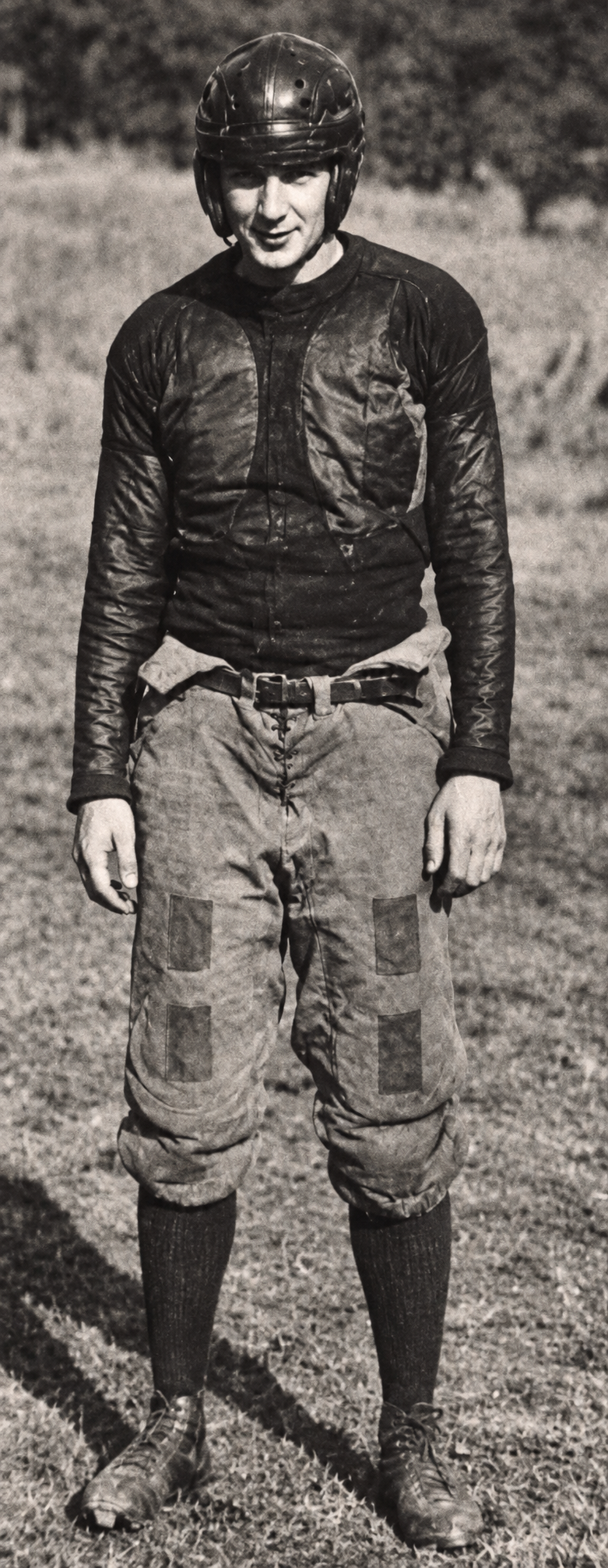
Sharp emerged as one of King’s principal offensive threats in 1923. The Tornado was so dominant that he frequently left games early after the outcome had been decided, yet he still led the team in yardage and averaged about 10 yards per carry.⁴
His play attracted attention far beyond Bristol. Sharp was described as a “wizard” in the open field, and observers familiar with major college football in both the East and West ranked him among the outstanding backs they had seen. One account went so far as to suggest that Sharp could be an All-American if Walter Camp ever saw him play.⁵
Sharp was never named an All-American, but he did earn postseason recognition as a second-team halfback on the All Virginia-Tennessee team following the 1923 season.⁶
He also played basketball and baseball at King, playing forward in basketball and both in the infield and as a pitcher in baseball.⁷
Sharp remained one of King’s leading football players through 1924, but injuries began to take a greater toll on him. He returned in 1925 as the principal veteran in a backfield that had lost several established players, only to suffer a sprained ankle early in the season. The injury lingered for weeks, and by late October he had decided to give up football for the remainder of the year.⁸
He nevertheless made one final comeback late in the season. In November, on a fourth-down play near the goal line, Sharp came within a foot of scoring before being injured again and taken from the field to applause. It proved a fitting, if painful, conclusion to a King football career built largely on his ability to keep getting through and around defenders.⁹
From Player to Coach
Even before his playing career ended, Sharp had begun coaching.
During the 1924–25 basketball season, while still a King student-athlete, he took charge of the Tennessee High School basketball team in Bristol in the midst of the season. By March, the team had developed into a strong regional opponent.¹⁰
That spring, Sharp also coached Tennessee High baseball.¹¹ At the same time, he continued his own athletic career at King. In the spring of 1926, he was pitching for the Tornado and was considered likely to develop into the team’s best pitcher.¹²
Sharp graduated from King College in 1926.¹³
Greeneville High
His move from college athlete to full-time coach was nearly immediate. In August, he assisted King head coach John Fletcher with preseason football practice, helping prepare the Tornado until it was time for Sharp to leave for his new position at Greeneville High School.¹⁴
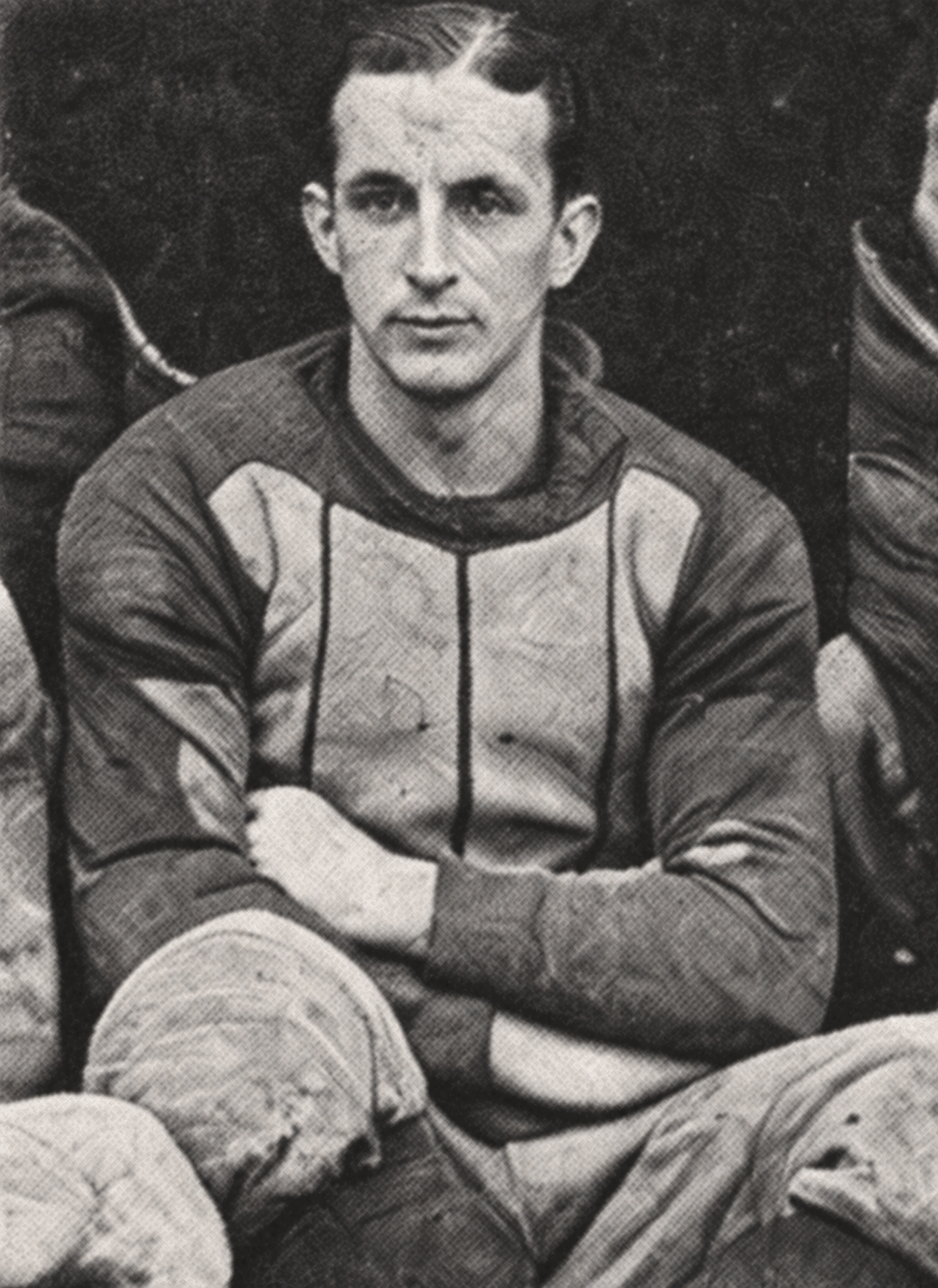 Sharp’s team was described as a heavy, hard-driving eleven.¹⁵ It was an interesting contrast to Sharp’s own playing style. He had made his name through speed and elusiveness, while his Greeneville team was characterized by its size and hard running.
Sharp was the school’s athletic coach, and he remained at Greeneville through the spring of 1927, when he coached the Greeneville High baseball team. The team was regarded as a strong club for a school in a town Greeneville’s size.¹⁶
By May, Sharp was considering other opportunities. He applied for the athletic director’s position at Virginia High School in Bristol, but was not selected.¹⁷ He did not return to Greeneville for the following school year.
Later Years
There was an interesting return to Sharp’s earlier coaching days through his son. In 1945, Fred Sharp was playing football for Tennessee High School, the same school where Elton had coached basketball and baseball 20 years earlier. Fred was described as quick on his feet and a good blocker and tackler, much like his dad.¹⁸
Sharp later moved to Florida, where he worked in the real estate business in Jacksonville.¹⁹
In September 1963, Sharp and Louise were visiting former King teammate Swede Swanson in Orlando when Sharp suffered a fatal heart attack on Sept. 28, 1963. He was 63 years old. His funeral was held in Bristol.¹⁹
Footnotes
- World War II Registration Card, Elton Fred Sharp; Chattanooga Daily Times, Dec. 2, 1923, p. 16. Sharp’s registration gives his birth as March 9, 1900, in Dayton, New York; contemporary accounts identify Jamestown as his hometown and Jamestown High as his former school.
- Bristol Herald Courier, Oct. 31 and Nov. 7, 1923.
- The Journal and Tribune (Knoxville), Dec. 18, 1922, p. 10.
- Chattanooga Daily Times, Dec. 2, 1923, p. 16.
- Nashville Banner, Nov. 8, 1923, p. 15; The Commercial Appeal (Memphis), Nov. 11, 1923, p. 21.
- Bristol Herald Courier, Dec. 5, 1923.
- Bristol Herald Courier, Feb. 2 and March 3, 1924; April 2, 1926, p. 10.
- Evening Herald Courier, Aug. 12, 1925, p. 2; Bristol Herald Courier, Sept. 21 and Oct. 30, 1925.
- Bristol Herald Courier, Nov. 27, 1925, p. 2.
- Bristol Herald Courier, March 11, 1925, p. 8.
- Bristol Herald Courier, April 2 and April 8, 1925.
- Bristol Herald Courier, April 2, 1926, p. 10.
- Bristol Herald Courier, Oct. 1, 1963, p. 2.
- Bristol Herald Courier, Aug. 26 and Aug. 28, 1926.
- Kingsport Times, Oct. 8, 1926, p. 2.
- Kingsport Times, Dec. 12, 1926, p. 8; Evening Herald Courier, April 25, 1927, p. 9; Bristol Herald Courier, April 26, 1927, p. 3.
- Evening Herald Courier, May 11, 1927, p. 2.
- Bristol Herald Courier, Oct. 31, 1945, p. 9.
- Bristol Herald Courier, Oct. 1, 1963, p. 2.