
James Phillip “Phil” Sawyer
Greeneville High Head Football Coach, 1927
James Phillip “Phil” Sawyer packed an extraordinary amount of athletics into a short life. A Greene County native, he became a three-sport athlete at Milligan College, pitched professionally for clubs throughout the Southeast, threw a perfect game in college, reached the South Atlantic League and became one of Knoxville’s leading pitchers. At the same time, he was building a second career as a teacher and coach.
Sawyer’s path repeatedly brought him back to Greene County. He pitched for the Greeneville Burley Cubs during the early 1920s and later returned to coach Greeneville High football in 1927. By the time of his death four years later, at age 27, he had also coached football at Milligan College and coached at Sulphur Springs High School, Warrensburg High School, Bledsoe County High School and Whitwell High School. Pasted text
Greene County and Milligan College
Sawyer was born Aug. 28, 1903, and grew up in the Warrensburg area of Greene County, the son of Jehu S. and Catherine Conway Sawyer. Baseball became Sawyer’s principal sport, and he began playing at an advanced level of competition at a remarkably young age. In June 1920, while still 16 years old, he was pitching for Morristown in the Appalachian League.
His college and professional playing careers soon became intertwined. Sawyer attended Milligan College, where he pitched for the baseball team by 1921 while also competing outside the college ranks during portions of the same period.
His college baseball career produced one particularly remarkable performance. On April 21, 1922, Sawyer pitched a perfect game against King College. Milligan won 10-0 as Sawyer struck out 17 batters. King did not record a hit or put a single batter on base.¹
Sawyer was also a member of Milligan’s football team from 1922 through 1924, playing tackle. One of his teammates in 1923 was T. W. Caskey, who would later coach Greeneville High football in 1925. Sawyer and Caskey were among the Milligan players awarded letters following the 1923 season.²
While still playing varsity football, Sawyer also began gaining coaching experience, directing Milligan’s junior varsity football team during the fall of 1924. He also played basketball at Milligan, making him a genuine three-sport college athlete, although baseball was the sport that carried him furthest.
College and Professional Baseball
Sawyer’s baseball career did not follow a simple progression from college to the professional game. For several years the two overlapped as he pitched for Milligan during the college season, played in the Appalachian League and returned to college to continue his education and compete in other sports.
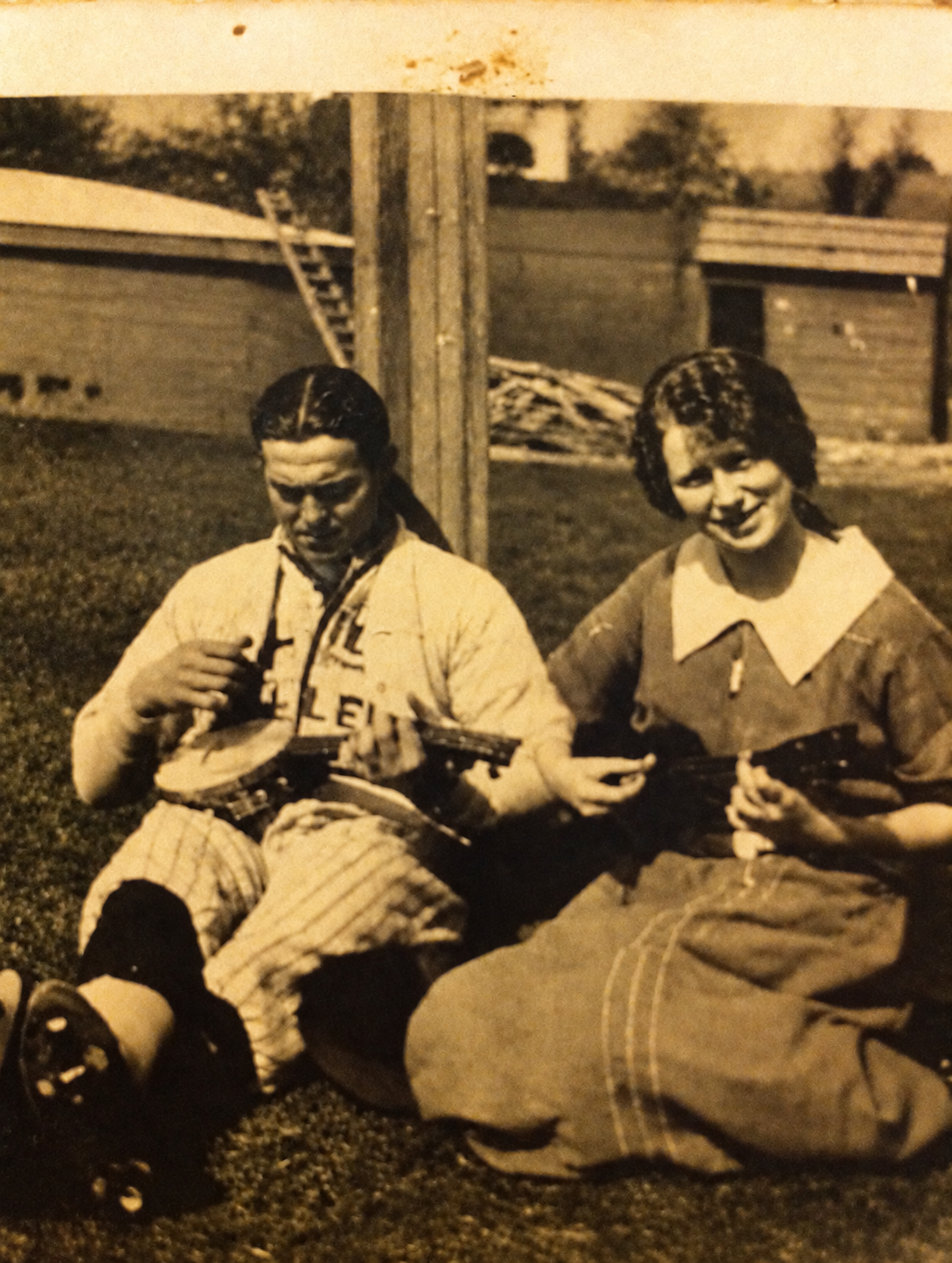
The arrangement reflected the much more fluid athletic environment of the 1920s, when Sawyer could move between college athletics and league baseball during the same general period. In 1921, he was pitching for the Greeneville Burley Cubs in the Appalachian League. After pitching for Milligan in the spring of 1922, he again spent the summer with Greeneville before returning to Milligan that fall.
The pattern continued as Sawyer established himself as one of the better young pitchers in the Appalachian League. His professional affiliation shifted from Greeneville to Johnson City in 1923, and he pitched for Johnson City the following season.
By then Sawyer was attracting attention beyond the Appalachian League. In 1924, he was sold in a transaction involving the Detroit Tigers of the American League and subsequently sent to Birmingham of the Southern Association. The move represented a significant step upward from the Class D Appalachian League.³
Even as his professional career expanded, Sawyer continued returning to Milligan. In the spring of 1925, he came back to pitch the college’s season opener before departing again to continue his professional career.⁴ By June, Sawyer was pitching in the Piedmont League, but another move soon brought him much closer to home.
The Knoxville Smokies
Sawyer joined the Knoxville Smokies of the South Atlantic League in June 1925 and quickly became one of the club’s most dependable pitchers. Within his first few weeks he won three consecutive games, and by the following spring a Knoxville newspaper described Sawyer simply as “Knoxville’s best pitcher last season.”⁵
Sawyer had progressed from pitching Appalachian League baseball as a teenager to becoming one of the leading pitchers on a South Atlantic League club. He returned to Knoxville in 1926 after initially holding out over his contract, and by June his pitching was again drawing favorable attention, with observers believing the former Milligan star was returning to his best form.⁶
Knoxville released Sawyer in July 1926, but his professional baseball career was far from finished. By this point, another part of Sawyer’s life was becoming increasingly important as coaching, which he had begun while still at Milligan, developed into a career of its own.
Teacher and Coach
In January 1927, Sawyer was hired to coach basketball at Sulphur Springs High School, where he also taught science. Within weeks, the basketball team was receiving attention for its strong record.⁷
His background made him particularly well suited to the broad athletic responsibilities commonly given to high school coaches of the era. Sawyer had played football, basketball and baseball at Milligan, had already coached football there and had several years of professional baseball experience. That combination soon brought him back to Greeneville.
Greeneville High
Sawyer became head football coach at Greeneville High School in 1927, succeeding Elton Sharp. His appointment continued an interesting connection between Greeneville High and Milligan College: Sawyer had been a Milligan football teammate of T. W. Caskey, Greeneville’s 1925 coach, and two years after Caskey directed the Greeneville program, Sawyer followed him into the same position.
For Sawyer, however, the Greeneville connection ran considerably deeper. Greene County was home, and he had already been a familiar local athlete through his years pitching for the Burley Cubs. He came to Greeneville High as an athlete already well known to local sports followers.
His stay as Greeneville’s football coach was brief, but coaching was becoming the more permanent side of his athletic career even as he continued pitching professionally. His playing days were not finished, and the following year he returned to professional baseball.
Back to Baseball
Sawyer reported to Knoxville for spring training in 1928. A profile that spring looked back over a career that had already carried him from Milligan and the Appalachian League to Birmingham and Knoxville.⁸
Sawyer ultimately pitched for the Greenville Spinners of Greenville, South Carolina, in the South Atlantic League that season, bringing him back into competition against his former Knoxville teammates.⁹ By early 1929, he was again coaching basketball, this time at Warrensburg High School in the Greene County community where he had grown up.¹⁰
His professional baseball career continued as well. In March 1929, Sawyer signed with the Augusta Tygers of the South Atlantic League.¹¹
Later Coaching Years
By the fall of 1929, Sawyer was coaching football at Bledsoe County High School in Pikeville, Tennessee. Baseball nevertheless remained part of his life, and even as he established himself as a coach, he continued to pitch, appearing on the mound for Johnson City in August 1930.¹²
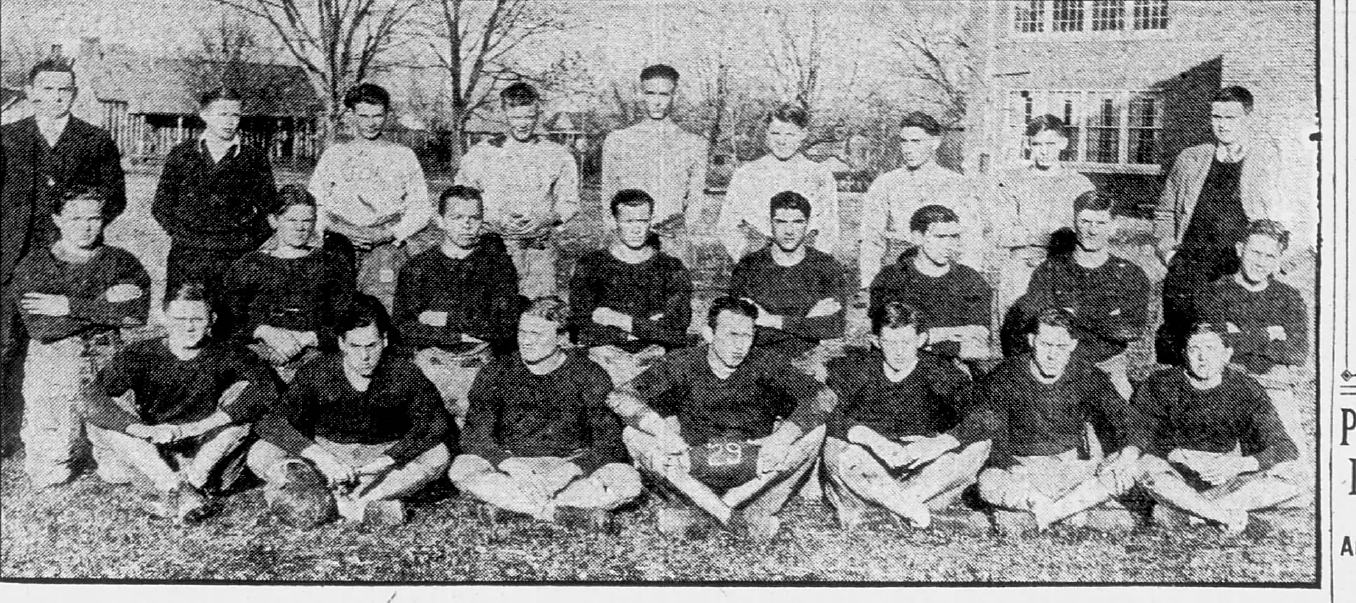
By 1930, Sawyer had moved to Whitwell High School in Marion County, where he coached the school’s athletic teams. His wife, Clara, also taught at Whitwell. Sawyer developed a strong reputation there among his students and players, with his teams compiling good records and Sawyer becoming known for his quiet and modest personality.
He was reluctant to claim credit for his accomplishments and more inclined to recognize the people who had helped him. It was a notable reputation for a man whose athletic résumé was already extensive despite his youth: a three-sport Milligan athlete, college football player and coach, perfect-game pitcher, Appalachian League standout, South Atlantic League pitcher, science teacher and high school coach.
Death at 27
Sawyer’s life ended suddenly in April 1931 when the automobile in which he and his wife were traveling was involved in a head-on collision about three and a half miles north of Whitwell. Clara suffered relatively minor injuries, while Sawyer’s injuries initially were not believed to be fatal. His condition deteriorated from shock and loss of blood, however, and he died the following morning.
Sawyer was 27 years old. His body was taken to Pikeville, where large numbers of Whitwell and Pikeville residents and students came to pay their respects, and then to Greeneville for his funeral.¹³
Footnotes
- Johnson City Chronicle, April 21, 1922. Sawyer pitched Milligan to a 10-0 perfect game over King College, striking out 17 without allowing a batter to reach base.
- Johnson City Chronicle, Dec. 12, 1923; Bristol Herald Courier, Oct. 23, 1924. Sawyer and T. W. Caskey were among Milligan’s football lettermen in 1923; Sawyer continued at tackle in 1924.
- Greeneville Democrat-Sun, July 4, 1924; Johnson City Chronicle, July 18, 1924. Sawyer was sold in a transaction involving Detroit and subsequently sent to Birmingham.
- Johnson City Staff-News, March 30, 1925; Johnson City Chronicle, April 11, 1925. Sawyer returned to Milligan for its season opener before continuing his professional baseball career.
- Knoxville Journal, June 30, 1925; Knoxville News-Sentinel, July 21, 1925; March 10, 1926.
- Knoxville Journal, March 3 and June 20, 1926.
- Johnson City Chronicle, Jan. 30, 1927, p. 2; Kingsport Times, March 3, 1927, p. 2.
- Knoxville News-Sentinel, March 23, 1928, p. 23.
- Knoxville Journal, July 13, 1928, p. 14.
- Johnson City Chronicle, Jan. 29, 1929, p. 4.
- Knoxville Journal, March 30, 1929, p. 8.
- Johnson City Chronicle, Aug. 19, 1930, p. 8.
- “Phil Sawyer Dies of Wreck Injuries,” 1931.