
Theodore Edward “Ty” Disney
Greeneville High Football Coach, 1935-36
Theodore Edward “Ty” Disney’s place in Greeneville High School football history reaches well beyond the 88 victories credited to him as head coach. His career connected several generations of Greeneville athletics and, in particular, a remarkable group of University of Tennessee players who learned football under legendary coach Robert Neyland.
Disney played at Tennessee alongside some of the biggest names of Neyland’s early years, including quarterback Bobby Dodd and halfbacks Gene McEver and Buddy Hackman, the celebrated “Hack and Mack” combination. He later became part of a group of former Volunteers who carried the football they had learned under Neyland into coaching.
That Tennessee connection became especially pronounced at Greeneville High. Hackman coached the Greene Devils before Disney. Disney succeeded him in 1935. Laird Holt, another former Volunteer and one of Disney’s Tennessee contemporaries, later followed him at Greeneville. Leonard Coffman, who played his final high school season for Disney in 1935, went on to become a standout fullback under Neyland at Tennessee and eventually succeeded Disney as Greeneville’s head coach in 1955.
Disney ultimately coached Greeneville football for 17 seasons in two separate tenures, compiling an 88-41-10 record. But football was only part of his work at the school. During his first tenure he coached basketball as well, including a girls team that won an East Tennessee championship. After leaving the head football position in 1955, he remained involved in physical education and athletics.
From Kentucky to Tennessee
Disney was born in Anderson County, Tennessee, on April 13, 1908.
His family’s movements during his youth took them through the coal country of East Tennessee and southeastern Kentucky. His father, A.J. Disney, was living in Caryville in Campbell County by 1915 and was associated with the coal business in the area in the years that followed. By 1927, the Disney family was living in Middlesboro, Kentucky.
It was there that Ty Disney established himself as a high school athlete.
Disney became a standout football player at Middlesboro High School, attracting attention beyond southeastern Kentucky. Newspaper coverage during the 1927 season documented his importance to the Middlesboro team, and by the end of that year he was drawing interest from college football programs. He visited the University of Kentucky, and it was speculated he would become a Wildcat.
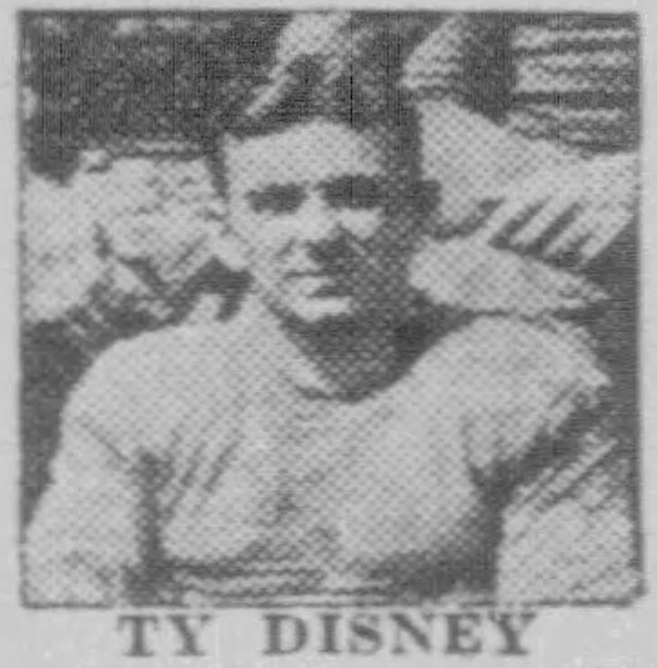
Disney chose the University of Tennessee.
He arrived in Knoxville in 1928, during the early years of one of the most important coaching eras in Southern football. Neyland had taken control of the Tennessee program in 1926 and was building the Volunteers around defense, field position, the kicking game and disciplined execution.
Disney pledged Sigma Alpha Epsilon in September 1928 and played on Tennessee’s freshman football team that fall. Disney was expected to carry a significant part of the offense in the freshman team’s game against Tennessee Wesleyan.[1]
Disney soon moved into varsity competition and became part of a Tennessee backfield crowded with talented players.
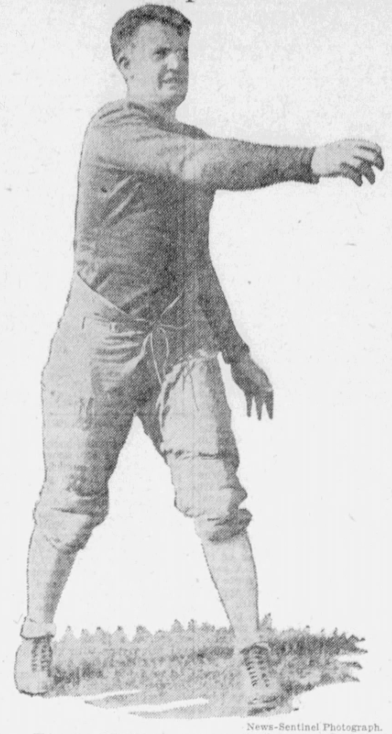
Among them was Quinn Decker, another fullback who would later enter coaching. Disney and Decker competed for playing time, and injuries sometimes altered their roles. By August 1930, Neyland was considering Disney for a place in a backfield that included Bobby Dodd, Buddy Hackman and Gene McEver. Disney had also mastered one of the Volunteers’ spin plays, an important component of Tennessee’s offense.[2]
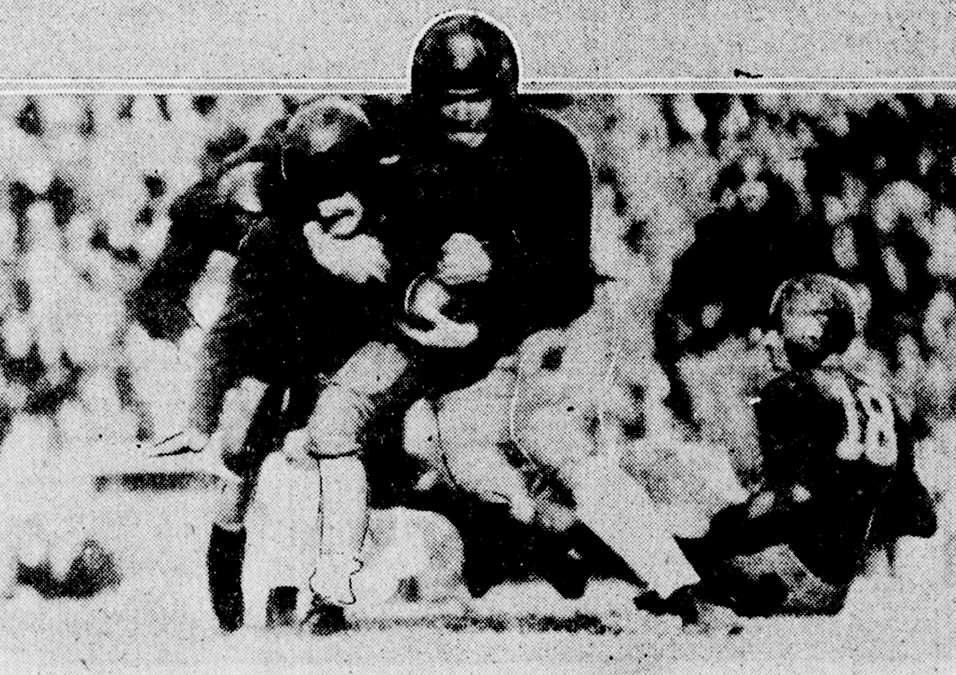
When McEver was unavailable for Tennessee’s 1930 opener against Maryville, Disney moved into his place in the backfield. Tennessee won 54-0, with Disney breaking loose for a 42-yard touchdown run and earning praise for his performance.[3]
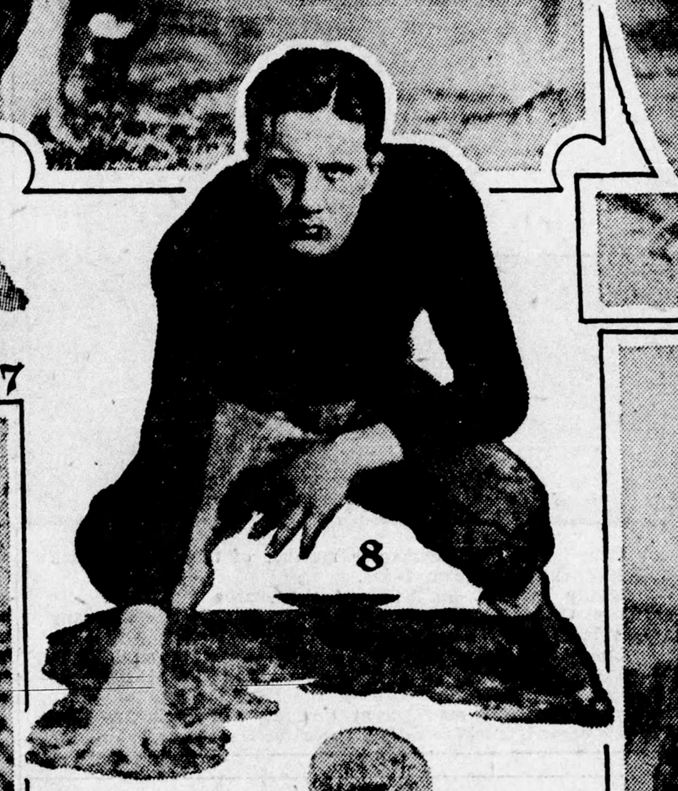
His opportunities increased again later that season when Decker suffered a broken ankle, and Disney was expected to replace him at fullback against Clemson.[4]
Disney’s football career was not without setbacks. He suffered a shoulder injury against Centre in 1929, although X-rays showed no fracture or dislocation.[5] By the beginning of his final Tennessee season in 1931, however, he was described as being in the best physical condition of his college career. A September profile identified him as a blocking back and noted that excess weight had hampered him the previous season.[6]
A Two-Sport Athlete
Football was only one part of Disney’s athletic career at Tennessee.
He also pitched for the Volunteers’ baseball team. Buddy Hackman was also a member of the Tennessee baseball team and served as its captain.
By 1931, Disney had developed into one of Tennessee’s most effective pitchers. After a 3-2 loss in which defensive errors hurt the Volunteers, the Knoxville Journal reported that Disney had pitched “winning ball” and described him as a “top-notch hurler.”[7]
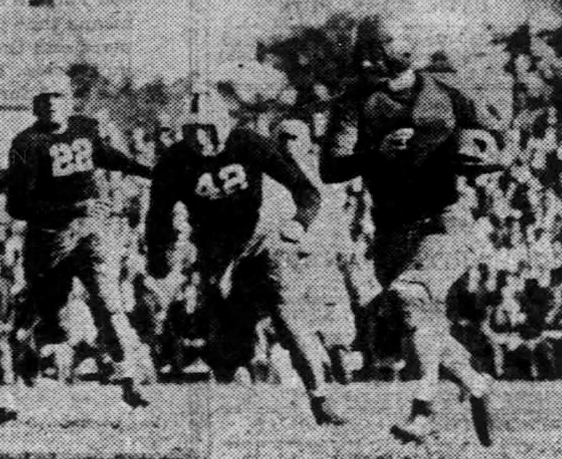
Professional baseball remained a possibility after college. In February 1932, the Knoxville News-Sentinel reported that Disney planned to seek a tryout with the Knoxville Smokies. The newspaper said he had compiled a 5-1 record for Tennessee the previous spring and called him one of the university’s better pitchers in the years since future major leaguer Tommy Bridges.[8]
But Disney’s professional future would ultimately be in coaching rather than baseball.
“Spread the Neyland System”
Perhaps the clearest indication of the direction Disney’s career was taking appeared in 1932.
Disney had taken coaching coursework at Tennessee and was among six graduating Volunteers who intended to enter the profession. An Associated Press story published around the country said the six planned to “spread the Neyland system” of football.
The group included Disney, Laird Holt and Quinn Decker. The same account pointed to other Neyland protégés who were already making names for themselves as coaches, specifically including Bobby Dodd and Buddy Hackman.[9]
The significance of that story became particularly apparent in Greeneville.
Hackman, Disney and Holt would all eventually coach Greeneville High. Disney and Holt were not simply former Tennessee players who happened to enter coaching; contemporary reporting specifically identified them among the young Volunteers preparing themselves to carry the football system they had learned under Neyland into other programs.
Disney was already doing that in the fall of 1932.
He returned to Middlesboro, where he was an assistant coach of the Middlesboro High School football team. His former Tennessee teammate Quinn Decker was coaching at Knoxville Central, and a September report noted that the two former Volunteers would be on opposite sidelines when Central played Middlesboro.[10]
Disney’s stay at Middlesboro was brief.
By September 1933, he had returned to Tennessee and was named backfield and assistant coach at Polk County High School in Benton. Disney was placed in charge of the backs and was also expected to coach basketball. Names from his time at Tennessee continued to be intertwined, as Laird Holt had been among those considered for the position.[11]
Thus, within little more than a year of the Associated Press story about Tennessee players spreading Neyland’s system, Disney, Decker and Holt were already establishing coaching careers of their own.
The Road to Greeneville
Disney also had increasingly strong family connections to Greeneville.
By 1929, his father had become manager of the Sterchi Brothers store in Greeneville. The family established itself in the community, and Mr. and Mrs. A.J. Disney were living on North Main Street.
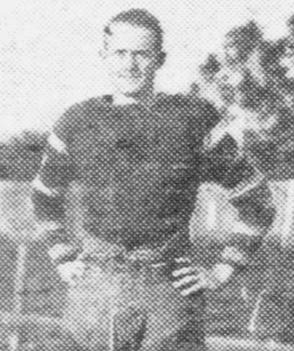
By late 1934, Ty Disney was also visiting regularly in Greeneville. He and his former Tennessee teammate Buddy Hackman were on the Greeneville YMCA basketball team. Among their teammates were Elmer Solomon and Dale Alexander, two other names that would become familiar in Greeneville athletics.[12]
Disney was also establishing himself professionally in town. In February 1935, he advertised an insurance and real estate business operating from Disney Furniture Store.[13]
Meanwhile, Hackman was coaching football at Greeneville High. He left after one season to become backfield coach at Roanoke College, and Greeneville turned to another of Neyland’s former players.
On June 15, 1935, Ty Disney was elected head football coach at Greeneville High.[14]
His Tennessee background was an important part of the decision. Local supporters wanted to continue the “Tennessee system” that Hackman had installed. Disney’s experience under Neyland made him a natural successor, while Elmer Solomon remained as assistant coach. Greeneville expected no change in the style of football Hackman had introduced because both Hackman and Disney were former pupils of Neyland.[15]
Disney therefore inherited more than Hackman’s position. He was expected to continue the football philosophy his former Tennessee teammate had begun installing at Greeneville.
Disney, Coffman and the 1935 Greene Devils
Disney also inherited a talented group of players, and one of the most significant additions came from a place Disney knew well.
Leonard Coffman had played three years of high school football at Middlesboro, Kentucky. He was a standout as a junior there during the 1934 season and was boxing in the area through the spring of 1935. Coffman then moved to Greeneville and played his final high school season for Disney in the fall of 1935.
The connection would become significant far beyond that single season.
Coffman became a standout fullback and linebacker for Greeneville before following Disney’s earlier path to the University of Tennessee. There, Coffman played for Neyland and became a prominent member of the great Tennessee teams of the late 1930s.
But in 1935, he was part of Disney’s first Greeneville team.
The results came immediately.
Greeneville went 9-1 in Disney’s first season, losing only once. The following year, the Greene Devils finished 9-2.
In his first two seasons as Greeneville’s head coach, Disney compiled an 18-3 record, an .857 winning percentage.
Disney’s coaching philosophy described an approach heavily influenced by defense. Disney first selected the 11 best defensive players on the squad and used that group on both sides of the football. He then identified the team’s best punter, followed by its best fullback and tailback.
Whether on the field or in the organization of the program, Disney’s early Greeneville teams reflected the emphasis on defense, kicking and fundamental football that had characterized his years under Neyland.
More Than Football
Disney’s responsibilities at Greeneville extended beyond football.
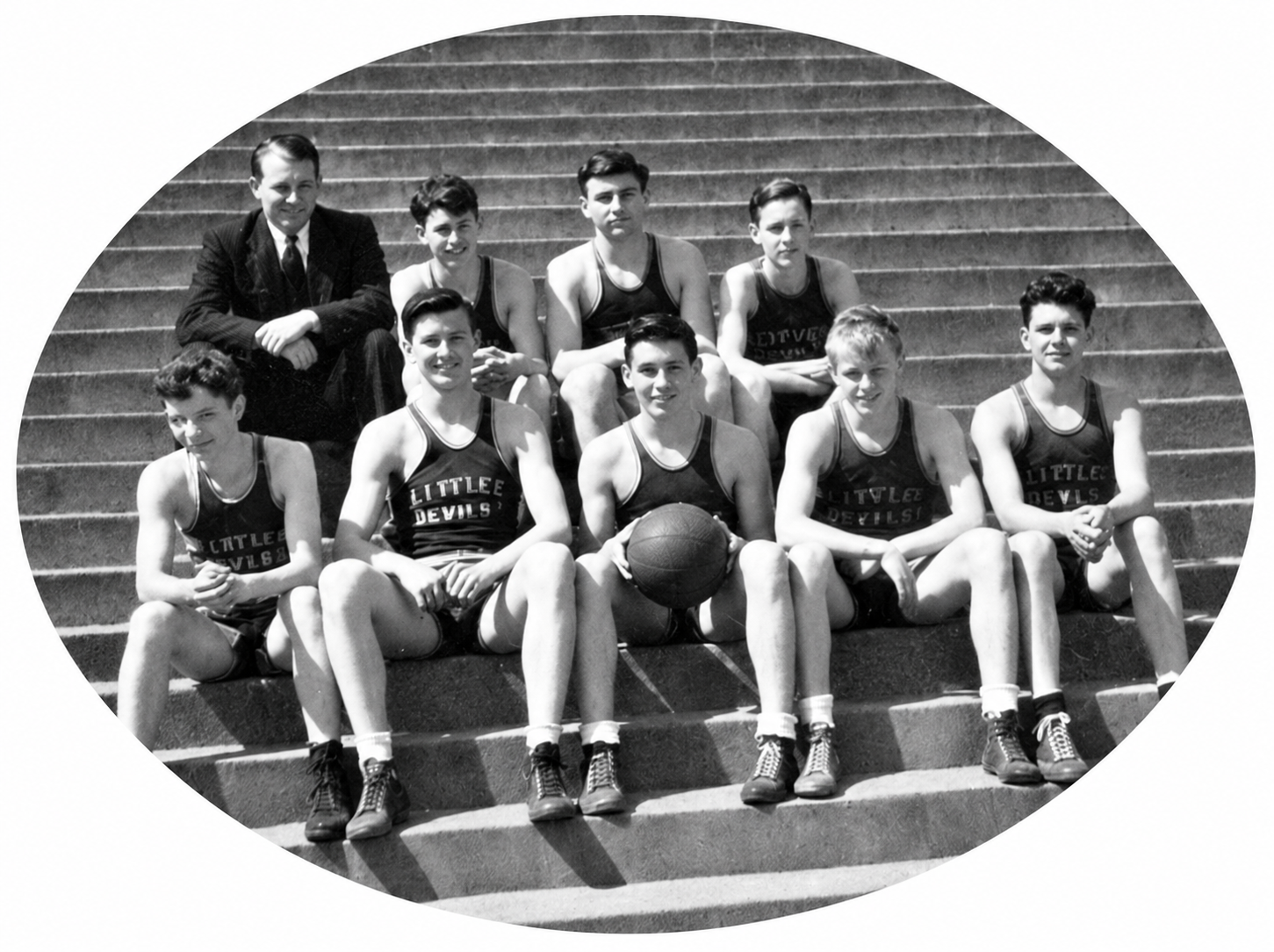
He also coached basketball, including the Greeneville girls team.
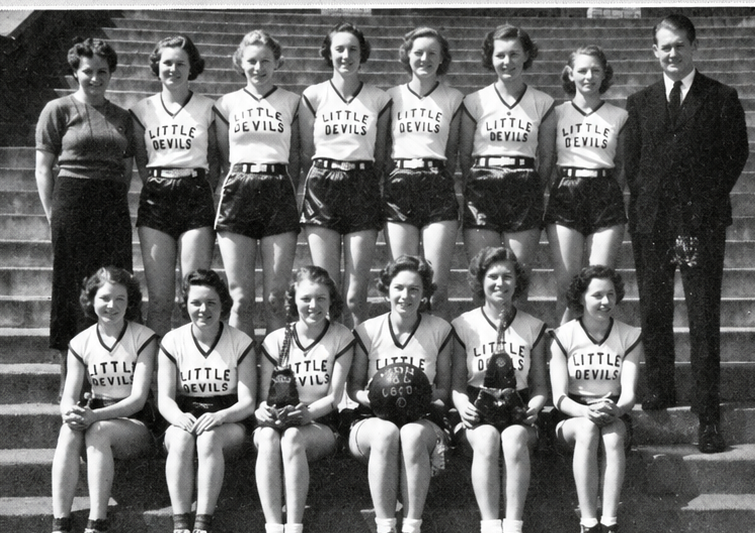
In February 1937, Disney’s girls defeated Baileyton to claim the undisputed Greene County championship.[16] They continued through district and regional tournament play without a loss and were recognized as East Tennessee champions.
Disney had therefore produced highly successful teams in both football and basketball in less than two years at Greeneville.
But by the spring of 1937, his relationship with the school system had become strained.
“No Disney, No Play”
The disagreement centered on Disney’s position, duties and compensation.
By early April, Greeneville newspapers were openly discussing whether Disney would return for another year. On April 10, the Knoxville Journal reported that he probably would not return and was considering other offers. The newspaper pointed to the success of his football teams, which had lost only three games in two seasons, as well as the championship run of his girls basketball team.[17]
Within days, the controversy spread to his players.
On April 16, the Knoxville News-Sentinel carried a striking headline:
“No Disney, No Play.”
Greeneville High football players had signed a petition declaring that they would not report for football the following fall — and would discourage other students from doing so — unless Disney returned as head of athletics.
The newspaper reported that Disney would not sign under the salary terms then being offered and also referred to friction between athletic supporters and the school board.[18]
The dispute was never resolved.
Instead, Disney moved a few miles down the road.
In early May 1937, he was named head coach at Tusculum College, succeeding Sam Doak.[19]
The Greeneville Sun directly connected the move to the dispute at Greeneville, reporting that Disney had withdrawn his name from consideration for the high school position after he and the school board differed over salary.
The situation at Greeneville had become serious enough that cancellation of the football program was discussed. Principal Frank Alexander declined to go that far, saying the school would wait to see what developed before canceling the schedule.[20]
Disney left Greeneville High after two football seasons, 21 games and 18 victories.
His replacement provided yet another link to his Tennessee years.
Laird Holt, who had been listed alongside Disney in 1932 among the Tennessee players preparing to spread Neyland’s football system through coaching, became Greeneville’s next head coach for the next three seasons.
Read the rest of Ty Disney’s bio here with his second stint at Greeneville High School